Many Tibetans have been detained in Kashi (Ch: Gayi) township, Sershul (Shiqu) County in eastern Tibet following their protest in early November against gold-mining operations at their traditional grazing site known as Serkhok.
According to delayed information from the region received by the Dharamsala-based Tibetan Policy Institute, around 80 of the Tibetan protestors were detained with many suffering torture during interrogation, some of whom have yet to be released. When contacted by international media for their reaction, Chinese authorities did not comment but also did not deny any such a protest having taken place. Following the protests, authorities also initiated a communication blackout in the region, making it difficult to further verify these reports.
Sershul county is located in the Kandze (Ganzi) Tibetan Autonomous Prefecture in present-day Sichuan Province. The name of the valley, Serkhok, means “gold valley” in Tibetan.
On 5 November 2025, local Tibetan residents discovered active gold-mining operations at the traditional grazing site for their cattle in Serkhok. They confronted the miners and immediately notified township authorities. According to residents’ accounts, township officials dismissed community concerns and asserted absolute government ownership of the land, stating: “You have no right to interfere. The complete ownership of this land belongs to the government. We will investigate and make decisions.”
Officials characterized the villagers’ attempts to halt mining activities as illegal interference.
The developments in Kashi represent the intersection of environmental disputes, restrictions on traditional economic livelihoods, cultural suppression, and systematic human rights violations. The pattern of mining-related conflicts, combined with long-standing restrictions on Tibetan religious, cultural, and economic practices, reflects broader documented trends across Tibetan regions in recent decades.
“The Chinese authorities’ ongoing enforced disappearances, surveillance, and treatment of protestors warrant urgent international attention and investigation,” said International Campaign for Tibet President Tencho Gyatso. “Those courageous Tibetans who opposed the mining activities in Serkhok and remain detained should be released immediately. Chinese authorities should be actively consulting Tibetan communities, not threatening and arresting them, before they approve mining activities which could threaten Tibetans’ environment and traditional economic livelihoods.”
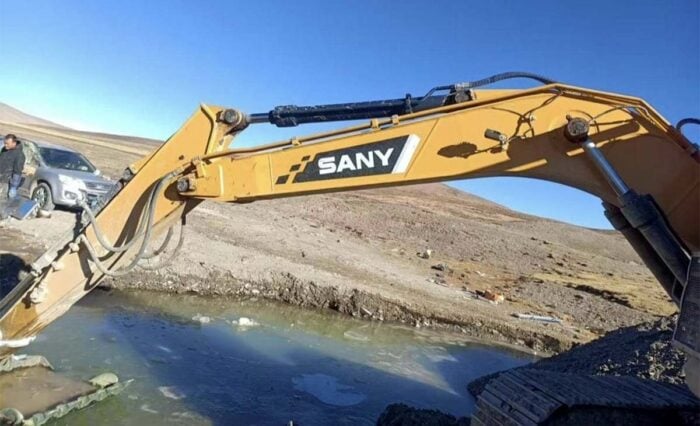
An excavator that is being used at the gold mining site in Kashi in eastern Tibet. (Photo: Tibet Policy Institute)
Mass Arrests and Detention
Available information suggests that on the evening of 6 November 2025, a day after the protests, authorities initiated a door-to-door search in Kashi and around 80 Tibetans were detained.
Detained individuals were transported to Sershul County facilities for interrogation, according to TPI. Sources reported that that those detained suffered torture, including sleep deprivation and aggressive interrogation leading to physical injuries such as broken ribs and kidney damage.
Detainees were compelled to sign multiple documents pledging to refrain from sharing information about the developments and committing not to protest mining activities in the future. The authorities also fabricated witness statements claiming that Tibetans assaulted Chinese officials without justification, according to TPI.
While most of them were released following interrogations, around seven Tibetans remained in detention as of 16 November, TPI said. Their whereabouts remain unknown at the time of this report. Under China’s own Criminal Procedure Law (CPL), the family of a detained person has the right to be informed of the reasons for and location of custody within 24 hours. Thus, their continued detention constitutes enforced disappearance under international human rights law.
Following the protests by Tibetans and their subsequent arrests, Chinese authorities (reported to be a joint operation involving the United Front Office, Public Security Bureau, armed police, and township officials) imposed a lockdown with a communication blackout in Kashi. Security authorities conducted armed patrols in public areas and invasive residential searches during which they detained individuals suspected of opposing mining operations and confiscated others’ mobile phones.
The authorities convened meetings warning residents against discussing the incident, emphasizing that any information leak “to the outside world” would constitute a serious criminal offense.
According to a resident, the November 2025 protests were a culmination of local Tibetan communities seeing many years of collusion between Sershul County officials and Kashi township authorities with private businessmen in granting permission to operate such mines.
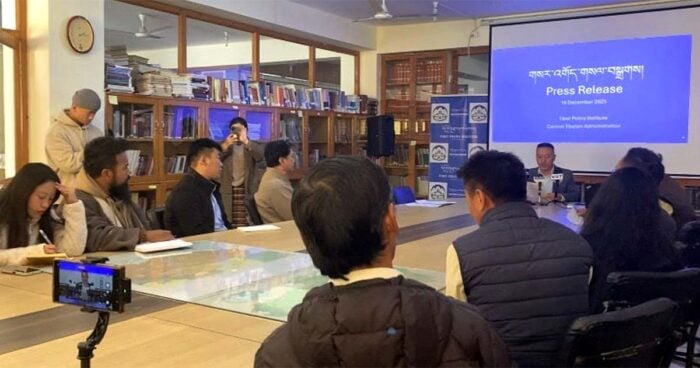
Tibet Policy Institute Deputy Director Tempa Gyaltsen Zamlha releasing updates on the gold mining in Kashi in eastern Tibet.