Choktrul Dorje Ten Rinpoche, a prominent Tibetan Buddhist leader, was detained by Chinese authorities around 4 December 2025, under unknown circumstances, according to sources close to him. Choktrul Dorje Ten is the abbot of Osel Thegchok Chokhorling monastery and founder of the Dorje Ten Ethnic Vocational and Technical High School, a Tibetan-medium instruction school in the northern Tibetan region of Amdo, which has now been forcibly closed.
Detained and held incommunicado
According to a Tibetan source who spoke to International Campaign for Tibet (ICT), Choktrul Dorje Ten was apprehended by Chinese authorities while traveling alone from his monastery to his home.
Concerningly, it remains unclear which Chinese security agency or agencies carried out his detention, and his whereabouts and status remain unknown.
“The detention of Choktrul Dorje Ten Rinpoche and the closure of his Tibetan-language instruction school is another painful reminder that the CCP onslaught against Tibetan language learning is reaching the last few schools that have thus far escaped their grasp,” said Tencho Gyatso, President of International Campaign for Tibet. “As ICT outlined in a recent report, we have seen an alarming acceleration of Chinese authorities’ attempts to undermine and eventually eliminate Tibetan language instruction. Tibetan is not meaningfully taught or supported in schools and can no longer be taught as supplementary classes in monasteries during school holidays. China is severing the connection between Tibetans and their language, and ultimately their culture and history.”
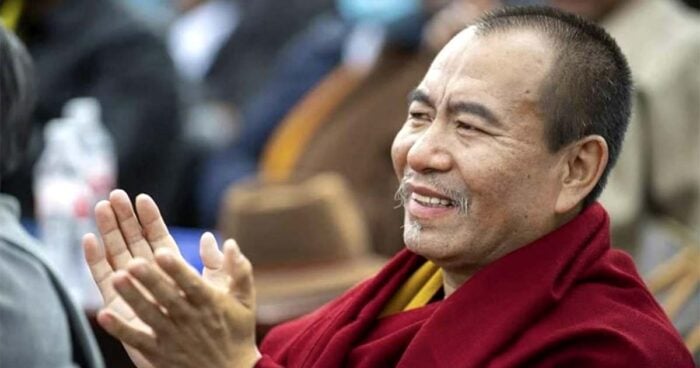
Choktrul Dorje Ten, undated photo (Source: Anonymous)
School Closure
The Dorje Ten Ethnic Vocational and Technical High School, located in Chigdril (Ch: Jiuzhi) county in Qinghai’s Golog (Guoluo) Tibetan Autonomous Prefecture, was founded by Choktrul Dorje Ten in 2010. According to ICT sources, the school was recently forcibly closed between October and November of this year, with all lay and monastic students sent home.
Although authorities have not provided an explanation of any alleged wrongdoing by Choktrul Dorje Ten, ICT sources believe the detention is linked to Chinese government policies targeting privately-run schools which provide Tibetan-language instruction at a time when Chinese authorities are attempting to undermine Tibetan education in favor of Chinese.
The vocational school is one of a few privately-run schools in the region that still offers education in Tibetan-language instruction. At the time of the forced closure, over 400 students were enrolled, about half of whom were young monks and nuns.
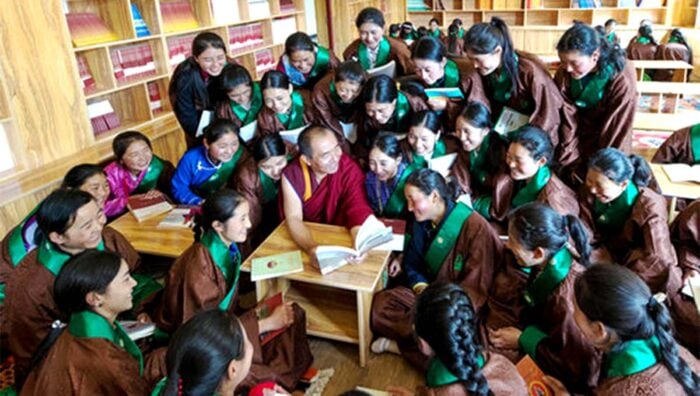
Choktrul Dorje Ten with students at his Dorje Ten Ethnic Vocational and Technical High School, 29 August 2019 (Source: China Volunteer Magazine)
Choktrul Dorje Ten: influential community leader targeted by Chinese authorities
Born on 25 October 1967, in Akyong Khangsar, Choktrul Dorje Ten (also known as Choktrul Thubten Yeshe Nyima) extensively studied Buddhist teachings in the Nyingma tradition under revered masters including Khenpo Jigme Phuntsok. He studied in and earned the title of Khenpo (abbot) at the renowned Larung Gar Buddhist Academy in Sertar, which has also long been a target of expulsions, demolitions and tight restrictions.
Choktrul Dorje Ten Rinpoche is a revered local community leader, who was even previously celebrated by Chinese authorities for his promotion of education and vocational training.
His recent arrest is particularly alarming as he was previously detained in November 2024 for unknown reasons. Although he was later released under strict surveillance and banned from leaving Qinghai province, this latest arrest may reflect an escalation.
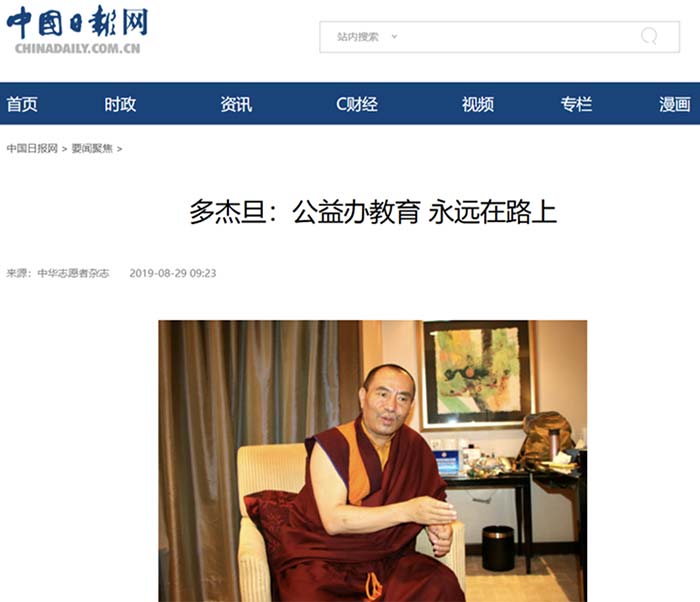
Rinpoche featured in a 2019 China Daily article titled “Public welfare education is a never-ending journey.”
Rinpoche’s role as a respected and influential leader active in Tibetan language and cultural preservation is reflected in the numerous leaderships posts he currently holds in the region, including in the Chinese political system:
- Principal of Nyenpo Yurtse Primary School (གཉན་པོ་གཡུ་རྩེའི་སློབ་ཆུང་གི་སློབ་གཙོ།)
- Chairman of the Gesar Epic Minthang Village Children’s Association (མགོ་ལོག་གེ་སར་སྒྲུང་རབས་སྨིན་ཐང་ཡུལ་ཚོའི་བྱིས་པའི་མཉམ་ལེན་གྱི་ཚོགས་གཙོ།)
- Chairman of the Gesar Culture Propagation Center at Mayang Lhakhar Chukmo (རྨ་གཡང་ལྷ་མཁར་ཕྱུག་མོའི་གེ་སར་རིག་གནས་རྒྱུད་སྤེལ་ལྟེ་གནས་ཀྱི་ཚོགས་གཙོ།)
- Director of the Gesar Cultural Heritage Base and Mayang Chugmo Gesar Culture Training Center (གེ་སར་རིག་གནས་རྒྱུན་འཛིན་གཞི་ས་དང་གེ་སར་རིག་གནས་རྨ་གཡང་ཕྱུག་མོའི་བརྒྱུད་སྦྱོང་བྱེད་གནས་ཀྱི་མགོ་གཙོ།)
- Founder and Principal of Dorje Ten Ethnic Vocational and Technical High School (རྡོ་རྗེ་བརྟན་མི་རིགས་ལས་རིགས་ལག་རྩལ་སློབ་གྲྭའི་སློབ་གཙོ།)
- Head of Jomo Monastery Kusum Khandroling (ཇོ་མོའི་དགོན་སྐུ་གསུམ་མཁའ་འགྲོའི་འདུ་གླིང་གི་དགོན་བདག)
- Head of Minthang Osel Thegchok Chokhorling Monastery (སྨིན་ཐང་དགོན་འོད་གསལ་ཐེག་མཆོག་གླིང་གི་དགོན་བདག)
- Chairman of Qinghai Province Nyenpo Yurtse Charity Association (མཚོ་སྔོན་ཞིང་ཆེན་གཉན་པོ་གཡུ་རྩེ་དགེ་ལས་ཐེབས་རྩ་ཚོགས་པའི་ཚོགས་གཙོ།)
- Vice-chairman of Chigdril County Political Consultative Conference (གཅིག་སྒྲིལ་རྫོང་སྲིད་གྲོས་ཀྱི་མགོ་གཙོ་གཞོན།)
Dorje Ten Ethnic Vocational and Technical High School
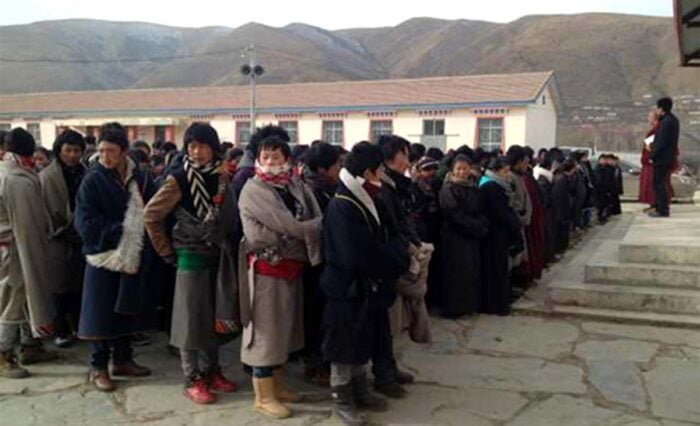
Assembly being held by Dorje Ten Ethnic Vocational and Technical Tibetan-instruction High School, 30/07/2013, (Source: Anonymous)
The Dorje Ten Ethnic Vocational and Technical High School was established with official Chinese government approval, spanning 96,000 square meters. At the time of closure, the school employed 66 teachers and produced 1,300 graduate students.
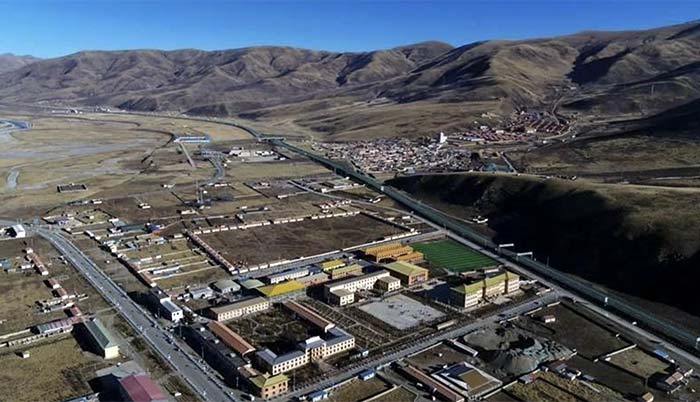
Dorje Ten Ethnic Vocational and Technical Tibetan-instruction High School (Source: Anonymous)
As the founder and principal, Choktrul Dorje Ten oversaw all aspects of the high school’s operations, including securing the school’s financial support and construction planning. The school’s construction permit was established according to Golog Prefecture People’s Government’s 2007 Document No. 160 on the official accreditation for private and vocational schools.
The school’s mission included preserving and promoting Tibetan culture, the development of both material prosperity and mental consciousness, and introducing and exchanging the rich knowledge and skills of other nationalities.
The curriculum included basic subjects such as Tibetan language, Chinese, English, mathematics, politics, ethics, and physical education. Specialized training was also offered in music, thangka painting, Tibetan medicine, Gesar epic arts, traditional song and dance, traditional handicrafts, and tourism service management. All courses, except Chinese and English, were primarily delivered in the Tibetan language.